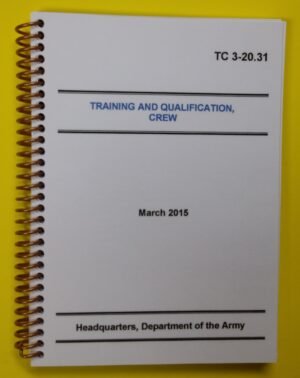
 TC 3-20.31, Training and Qualification – Crew – 2015 – Mini size
$ 9.95

The "Internet Archive Pirates" were not criminals in the sense of warez scene crackers or DVD rippers. They were . They consisted of three distinct archetypes:
For anyone interested in the intersection of law, technology, and cultural preservation, “internet archive pirates 2005” is not merely a historical keyword. It is a chapter in the ongoing story of how we decide what to save, who gets to save it, and who has the right to look back.
Brewster Kahle, the founder of the Internet Archive, looked at this wall of legal red tape and the decaying digital infrastructure and apparently said: "To hell with the waiting. Save it first, ask later."
Conversely, the digital preservation movement argued that strict 20th-century copyright laws were actively destroying 21st-century history. If an archivist did not "pirate" a website, a digital-only television broadcast, or a piece of obsolete software, that media could vanish forever when a server turned off or a hard drive degraded. In 2005, the Internet Archive proved that the line between a digital pirate and a digital librarian was often just a matter of intent. The Legacy of 2005 internet archive pirates 2005
: Healthcare Advocates claimed that the Internet Archive had illegally stored and provided access to their old web pages without authorization. The Charges : The suit sought damages for copyright infringement and alleged violations of the Digital Millennium Copyright Act (DMCA) Computer Fraud and Abuse Act The Result
In 2025, we think of the Internet Archive (archive.org) as a digital library—a noble, non-profit home for old websites, books, and music. But in 2005, to major publishers and the entertainment industry, the Internet Archive looked like something else entirely:
Healthcare Advocates was not pleased. The company claimed that it had placed a on its own servers shortly after filing suit, instructing the Wayback Machine to block public access to the historical versions of its site. The robots.txt file is a voluntary web standard used by site administrators to tell search engines and archiving bots which parts of a site should not be crawled or displayed. The Internet Archive goes a step further: if a site owner adds a robots.txt file, the Archive will also remove previously archived versions of those pages from public view. The "Internet Archive Pirates" were not criminals in
Countless operating systems, computer games, and utility programs from the 1980s and 1990s belonged to companies that no longer existed, meaning the software could no longer be legally purchased. Pirates and archivists alike used the Internet Archive as a repository to store these digital artifacts. While technically a violation of copyright law at the time, the Archive argued that allowing these programs to disappear entirely was a greater loss to human culture than the technical infringement of orphaned copyrights. 3. Moving Images and Pre-YouTube Video Sharing
Utilizing the keyword essence of "internet archive pirates 2005," specific uploads gained legendary status.
The 2005 case of represents a pivotal, though often misunderstood, moment in the history of digital copyright. At its core, the controversy surrounding the Internet Archive (IA) during this era wasn't about traditional "piracy" for profit, but rather the friction between digital preservation and intellectual property laws . The Context of 2005 It is a chapter in the ongoing story
Here is what the "pirates" of the Internet Archive were actually doing that year:
: While the Archive was being criticized for "piracy," Sony-BMG was found in late 2005 to be shipping "rootkit" DRM on CDs to prevent copying, which actually compromised user security and led to a public relations disaster. Recent Legacy
: Choose Navigation if you are new to the game (it combats the difficult wind physics), or Fencing if you plan to fight heavily.
TC 3-20.31, Training and Qualification – Crew – 2015 – Mini size