
Fond bleu

Sexuele Voorlichting Puberty Sexual Education For Boys And Girls 1991 Englishavigolkesl Full !!top!! (iPhone POPULAR)

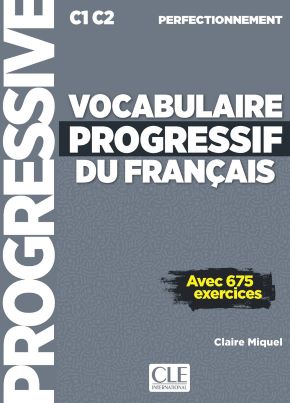
Ouvrage de Vocabulaire en français langue étrangère (FLE) dans la collection Progressive destiné aux grands adolescents et adultes, niveau perfectionnement (C1/C2).

Sexuele Voorlichting Puberty Sexual Education For Boys And Girls 1991 Englishavigolkesl Full !!top!! (iPhone POPULAR)

To help tailor this template or build specific educational materials, please share:

"Seksuele Voorlichting" (1991), also known as "Puberty: Sexual Education for Boys and Girls," is a Belgian educational documentary directed by Ronald Deronge that utilizes explicit live-action footage to explain puberty. While intended as a clinical, no-nonsense educational tool, the film has received criticism for its direct, non-animated approach to depicting adolescent development and human reproduction. For more details, visit IMDb . Sexuele voorlichting (Video 1991)

When puberty education successfully weaves together biological facts, relationship skills, and a critical understanding of romantic narratives, the benefits to youth are profound:

: Intimacy is reframed as a healthy, joyful aspect of human life rather than a source of fear or shame. To help tailor this template or build specific

The most reliable way to study or view comprehensive sex education media from 1991 is through specialized university libraries, moving-image archives, or national health registries rather than general web searches.

Viewed through a modern lens, certain segments of the documentary show their age. For example, film reviewers have pointed out a scene celebrating a pregnancy announcement where characters consume alcohol—a practice heavily warned against today due to modern understandings of Fetal Alcohol Spectrum Disorders (FASD). This highlights how sex education and public health materials must constantly evolve alongside medical science.

The documentary covers a wide array of topics related to adolescence and human biology: For example, film reviewers have pointed out a

Sven held out his hand, palm up. An offer, not a demand. “We can write one together.”

This 1991 film is a prime example of what sociologists call the "Dutch Model." Research has consistently shown that this approach—openness, biology-focused education, and normalizing conversations about sex—leads to:

While the 1991 film was excellent for its era, modern education has expanded to include far more nuance. “Just Around the Corner” for puberty)

Knowledge dispels fear. Understanding that emotional turbulence and romantic confusion are normal parts of puberty reduces isolation.

School-based curricula in 1991 often used (e.g., “Just Around the Corner” for puberty), and overhead transparencies of reproductive anatomy.

Curricula in 1991 were largely driven by the biological imperatives of puberty—teaching children about the physical changes their bodies were undergoing. However, the methodology was heavily influenced by the "risk reduction" model. Unlike the "risk elimination" (abstinence-only) models that would gain traction later in the decade, 1991 education often included information on contraception, though access to this information varied wildly based on region and socio-economic status.

To help tailor this template or build specific educational materials, please share:

"Seksuele Voorlichting" (1991), also known as "Puberty: Sexual Education for Boys and Girls," is a Belgian educational documentary directed by Ronald Deronge that utilizes explicit live-action footage to explain puberty. While intended as a clinical, no-nonsense educational tool, the film has received criticism for its direct, non-animated approach to depicting adolescent development and human reproduction. For more details, visit IMDb . Sexuele voorlichting (Video 1991)

When puberty education successfully weaves together biological facts, relationship skills, and a critical understanding of romantic narratives, the benefits to youth are profound:

: Intimacy is reframed as a healthy, joyful aspect of human life rather than a source of fear or shame.

The most reliable way to study or view comprehensive sex education media from 1991 is through specialized university libraries, moving-image archives, or national health registries rather than general web searches.

Viewed through a modern lens, certain segments of the documentary show their age. For example, film reviewers have pointed out a scene celebrating a pregnancy announcement where characters consume alcohol—a practice heavily warned against today due to modern understandings of Fetal Alcohol Spectrum Disorders (FASD). This highlights how sex education and public health materials must constantly evolve alongside medical science.

The documentary covers a wide array of topics related to adolescence and human biology:

Sven held out his hand, palm up. An offer, not a demand. “We can write one together.”

This 1991 film is a prime example of what sociologists call the "Dutch Model." Research has consistently shown that this approach—openness, biology-focused education, and normalizing conversations about sex—leads to:

While the 1991 film was excellent for its era, modern education has expanded to include far more nuance.

Knowledge dispels fear. Understanding that emotional turbulence and romantic confusion are normal parts of puberty reduces isolation.

School-based curricula in 1991 often used (e.g., “Just Around the Corner” for puberty), and overhead transparencies of reproductive anatomy.

Curricula in 1991 were largely driven by the biological imperatives of puberty—teaching children about the physical changes their bodies were undergoing. However, the methodology was heavily influenced by the "risk reduction" model. Unlike the "risk elimination" (abstinence-only) models that would gain traction later in the decade, 1991 education often included information on contraception, though access to this information varied wildly based on region and socio-economic status.

Fermer la popin
Fermer la popin
Fermer la popin